
 Martha Alizo
What you eat can affect how your skin looks and functions as you get older, but no single food can literally stop aging or erase years from your face.
What food can do is give your skin some of the raw materials it needs to maintain collagen, support its protective barrier, deal with oxidative stress, and recover from everyday environmental damage. Recent research on nutrition and skin aging has found benefits from dietary components including polyphenols, healthy fats, carotenoids, and certain vitamins, although the strength of the evidence varies depending on the nutrient and outcome being measured.
That makes the idea of an “anti-aging diet” much less mysterious than it sounds. You don’t need an expensive powder or a refrigerator full of exotic ingredients. Some of the most useful foods are berries, fish, tomatoes, leafy vegetables, nuts, avocados, and other foods you can easily build into ordinary meals.
Here are 10 worth eating regularly if you want to support healthy aging while taking care of your skin from the inside.
What Causes Skin to Age, and How Can Nutrition Help?
Skin aging comes from a combination of processes you can’t completely control and exposures you can do something about.
As the years pass, the skin naturally becomes thinner and produces less collagen and elastin. Cell renewal changes, and the skin may become drier or less firm. Then there is extrinsic aging, changes accelerated by outside influences such as ultraviolet radiation, smoking, pollution, and other environmental stressors. UV exposure is particularly important because repeated exposure contributes to wrinkles, uneven pigmentation, and changes in the collagen-rich structure of the skin.
Oxidative stress is part of this picture. Reactive molecules can damage lipids, proteins, and other cellular structures when the body’s antioxidant defenses can’t adequately keep them under control. Diet supplies antioxidant compounds and nutrients involved in normal skin structure and function.
This doesn’t mean that antioxidants in your breakfast work like an internal sunscreen. They don’t.
Think of food as one part of a much bigger skin-health picture. A nutrient-rich diet can support the skin, but it doesn’t replace sunscreen, shade, sleep, exercise, or avoiding smoking.
Which Nutrients Matter Most To Slow Down Aging?
Instead of looking for one magical anti-aging nutrient, it makes more sense to eat foods that give you several useful nutrients at once.
Vitamin C deserves particular attention. Your body needs it to make collagen, and it also functions as an antioxidant. Because humans can’t manufacture vitamin C themselves, it has to come from the diet.
Carotenoids such as beta-carotene, lycopene, and lutein are found in brightly colored fruits and vegetables. Research has examined their ability to help the skin respond to oxidative and UV-related stress.
Polyphenols are a large family of plant compounds found in berries, cocoa, tea, olive oil, and many fruits and vegetables. A 2025 systematic review and meta-analysis of dietary interventions found that polyphenol interventions were associated with improvements in several measured skin-aging outcomes, including hydration and barrier function.
Healthy fats matter too. Skin contains a lipid-rich barrier that helps limit water loss, and foods containing unsaturated fats also tend to bring other useful nutrients with them.
Then there’s protein. Your body needs amino acids to build proteins, including collagen. You don’t have to eat collagen itself to make collagen; getting adequate dietary protein alongside nutrients such as vitamin C gives your body the building blocks it needs.
The best approach is therefore variety rather than trying to get enormous amounts of one antioxidant.
Super Foods That Slow Down Aging
1. Berries
Blueberries, strawberries, blackberries, and raspberries pack a surprising amount of nutrition into a small serving.
Their colors come partly from plant compounds such as anthocyanins, which belong to the wider polyphenol family. Berries also provide vitamin C, with the exact amount depending on the type.
That combination makes berries particularly useful for a skin-friendly diet: vitamin C is needed for collagen synthesis, while their polyphenols add to the mix of antioxidants you get from plant foods.
You don’t need to chase one particular “super berry.” Rotate them.
Add strawberries to yogurt, throw frozen blueberries into oatmeal or smoothies, or eat raspberries and blackberries with nuts as a snack. Frozen berries are useful too, especially when fresh berries are expensive or out of season.
2. Fatty Fish
Salmon, sardines, mackerel, herring, and similar oily fish give you something that most fruits and vegetables don’t: substantial amounts of long-chain omega-3 fatty acids along with high-quality protein.
That combination makes fish a useful food for both healthy aging and skin nutrition.
Protein supplies amino acids your body can use when maintaining and repairing tissues. The fats in oily fish include EPA and DHA, while fish also provides micronutrients that vary by species.
Research into dietary fats and skin aging is still developing, but a recent meta-analysis found that lipid and fatty-acid interventions were associated with improvements in wrinkles, hydration, and elasticity across the included studies. That doesn’t mean a serving of salmon will erase wrinkles; it suggests that dietary fat quality deserves a place in the bigger skin-health picture.
Try grilled salmon with vegetables, sardines on whole-grain toast, or mackerel with rice and a large salad.
MUSR READ==> 14 Anti-Aging Tips That Make You Look 10 Years Younger in Real Life
3. Tomatoes
Tomatoes are one of the most interesting foods when the conversation turns to diet and sun-related skin aging.
Their star compound is lycopene, the red carotenoid also found in foods such as watermelon and pink grapefruit.
In one randomized controlled trial, women ate tomato paste providing lycopene with olive oil for 12 weeks. Researchers found evidence of increased resistance to some UV-related skin effects and changes in markers associated with photodamage compared with the control treatment.
That does not make tomatoes a replacement for sunscreen. Dietary photoprotection is modest compared with proper sun protection.
Cooking tomatoes can make lycopene easier to absorb, particularly when tomatoes are eaten with fat. That gives you plenty of practical choices: tomato sauce with olive oil, tomato-based stews, roasted tomatoes, or tomato paste added to soups and sauces.
4. Avocados
Avocados combine monounsaturated fats with fiber, carotenoids, vitamin E, and several other nutrients.
There’s also some direct human research behind their reputation as a skin-friendly food.
In a small randomized pilot study involving 39 women, eating one avocado daily for eight weeks was associated with improvements in measurements of forehead skin firmness and elasticity. The researchers did not find significant improvements in all of the skin measurements they tested, including hydration and UVB resistance, so the results shouldn’t be exaggerated.
Still, avocado is an easy way to bring unsaturated fats and plant nutrients into a meal.
Add it to eggs, salads, sandwiches, grain bowls, or beans. You don’t need to eat a whole avocado every day to benefit from having it as one of several healthy fat sources in your diet.
5. Almonds and Other Nuts
A small handful of nuts gives you healthy fats, plant protein, and minerals in a remarkably convenient package.
Almonds are especially interesting because they contain plenty of vitamin E and have been tested in human skin-aging research.
In a randomized controlled study of postmenopausal women, participants who received almonds as 20% of their daily energy intake showed reductions in measured wrinkle severity and facial pigment intensity after 24 weeks compared with baseline measurements. The study involved a specific group of women with lighter Fitzpatrick skin types, so the results shouldn’t automatically be generalized to every woman.
Earlier research in postmenopausal women also found reductions in wrinkle width and severity after almond consumption.
Walnuts, pistachios, Brazil nuts, and other nuts have different nutrient profiles, so variety still makes sense.
Choose plain or lightly seasoned nuts most often and use them on yogurt, oatmeal, and salads, or simply eat a small handful as a snack.
ALSO READ==> How to Slow Aging: 15 Simple Tips
6. Leafy Green Vegetables
Spinach, kale, collard greens, arugula, and other dark leafy vegetables don’t need a glamorous “anti-aging” label to earn their place on this list.
They bring several nutrients associated with normal skin function into the same meal, including carotenoids and vitamin C, with amounts varying considerably among different greens.
More broadly, nutritional dermatology research supports diets that provide a wide range of vitamins, minerals, essential fatty acids, polyphenols, and other plant compounds rather than depending on one isolated supplement.
Leafy greens are also useful because they’re easy to combine with other foods on this list.
Make a spinach salad with avocado and berries. Cook greens with olive oil. Add kale to bean soup. Toss spinach into an omelet.
The goal isn’t to force yourself through enormous bowls of raw kale every day. It’s to make green vegetables a normal part of your meals.
7. Sweet Potatoes and Other Orange Vegetables
Sweet potatoes, carrots, pumpkin, and other deep orange vegetables get much of their color from carotenoids.
Beta-carotene is probably the best-known example.
Carotenoids have attracted attention in skin research because they can accumulate in tissues and participate in the body’s antioxidant defenses. Reviews of dietary approaches to skin health continue to identify carotenoids as one group of compounds relevant to skin aging and responses to UV exposure.
Sweet potatoes also make it remarkably easy to turn skin-friendly nutrition into an actual meal rather than a collection of supplements.
Roast them with olive oil, add them to stews, serve them alongside fish, or mash them with herbs and spices.
And don’t get trapped into thinking orange vegetables are interchangeable with sunscreen. Food can support the skin’s defenses, but it can’t provide reliable SPF protection.
8. Extra Virgin Olive Oil
Extra virgin olive oil deserves more attention than it gets in beauty conversations.
Its main fat is oleic acid, a monounsaturated fatty acid, and extra virgin olive oil also contains phenolic compounds. It is one of the characteristic fat sources in Mediterranean-style eating patterns and can replace fats that are higher in saturated fat in many meals.
Healthy aging goes far beyond the appearance of your face, of course. Olive oil has been extensively studied in relation to cardiovascular and metabolic health, which is one reason it makes more sense as an everyday food than many fashionable “anti-aging” ingredients.
For skin specifically, evidence is stronger for healthy dietary patterns and groups of nutrients than for claiming that olive oil alone prevents wrinkles. Research on nutrition and skin aging does, however, support the relevance of dietary fats and plant antioxidants.
Use extra virgin olive oil on salads, vegetables, beans, or whole grains, or as part of sauces and dressings.
There is no need to drink shots of it.
9. Pomegranate
Pomegranate seeds contain polyphenols and provide vitamin C, fiber, and other plant nutrients.
Its deep red color gives you a clue that you’re eating a fruit rich in phytochemicals, but pomegranate shouldn’t be treated as a wrinkle treatment in fruit form. Much of the excitement surrounding individual plant compounds comes from laboratory research, while human outcomes are more complicated.
The stronger message from current nutrition research is that polyphenol-rich foods, eaten as part of a varied diet, may contribute to skin hydration, barrier function, and protection from oxidative stress.
Scatter pomegranate arils over yogurt, oatmeal, salads, or grain bowls. Whole seeds also give you fiber that juice largely lacks.
If pomegranates aren’t readily available where you live, don’t worry. You can get polyphenols from berries, cocoa, tea, grapes, and many other plant foods.
10. Dark Chocolate and Cocoa
Chocolate on an anti-aging food list sounds suspiciously convenient, but cocoa itself contains flavanols that have been studied for their effects on the skin.
In a 24-week randomized, double-blind, controlled trial involving women with moderately photo-aged skin, a cocoa beverage providing 320 mg of cocoa flavanols per day was associated with improvements in measured facial wrinkles and elasticity compared with placebo. Hydration and skin-barrier measurements did not significantly differ between the groups.
The important word there is cocoa.
A chocolate bar can also contain substantial amounts of sugar and calories, and the flavanol content of commercial chocolate varies widely. You can’t assume that every bar labeled “dark chocolate” provides the same amount used in research.
Unsweetened cocoa powder can be mixed into oatmeal, yogurt, smoothies, or other foods. If you prefer dark chocolate, treat it as something enjoyable that can contribute cocoa compounds, not medicine that needs to be eaten every day.
What About Green Tea?
Green tea deserves a mention even though it’s a drink rather than one of the 10 foods.
It contains catechins, including EGCG, and has been studied for potential effects on UV-related skin damage.
Some controlled studies have reported improvements in certain measures of skin response after regular intake of green tea polyphenols. A systematic review and meta-analysis also found evidence that oral green-tea catechins were associated with reduced erythema responses to relatively low-intensity UV exposure.
The evidence isn’t perfectly consistent. Another randomized controlled trial found that green-tea catechins with vitamin C did not significantly reduce the measured inflammatory response to UV exposure.
So enjoy green tea if you like it, but don’t turn it into a beauty requirement.
Foods You Should Avoid That Speeds Up Aging
A skin-friendly diet isn’t only about adding berries and avocados. The overall pattern still matters.
One issue researchers have examined is glycation. This happens when sugars react with proteins and form compounds known as advanced glycation end products, or AGEs. Collagen and elastin are long-lived proteins, making glycation particularly interesting in the study of skin aging.
Dietary patterns high in refined carbohydrates and added sugars can also make it harder to maintain good overall metabolic health.
That doesn’t mean sugar has to disappear from your life. A piece of cake doesn’t suddenly age your face.
It makes more sense to keep heavily processed, sugar-rich foods from becoming the foundation of your diet while eating plenty of vegetables, fruit, legumes, nuts, whole grains, healthy fats, and good protein sources. Reviews of diet and skin aging have discussed both oxidative stress and glycation as relevant parts of the aging process.
How to Build an Anti-Aging Diet Without Overthinking It
You don’t need to eat all 10 foods every day.
Instead, build meals around several categories.
Have a source of protein such as fish, eggs, beans, lentils, tofu, chicken, or yogurt. Add one or two different vegetables. Include fruit regularly, especially berries and other deeply colored fruits when available. Get fats from foods such as nuts, seeds, avocado, fish, and olive oil.
Then keep changing the colors.
Red tomatoes provide a different mixture of plant compounds from orange sweet potatoes. Dark leafy greens differ from purple berries. Almonds bring nutrients you won’t get in the same amounts from strawberries.
This is one reason a varied whole-food diet makes more sense than trying to identify the single strongest antioxidant.
A simple day could look like oatmeal with berries and almonds in the morning, a large salad with leafy greens and avocado at lunch, and salmon with roasted sweet potato and tomato-based vegetables at dinner.
Nothing about that meal plan looks like an “anti-aging protocol.” That’s the point.
Can Food Really Boost Collagen Production?
Your body makes its own collagen, but it needs the right materials to do it.
Protein supplies amino acids. Vitamin C is required for normal collagen biosynthesis. Other nutrients contribute to normal tissue maintenance as well.
So instead of searching for a single “collagen-boosting food,” make sure your diet provides enough protein and plenty of vitamin-C-rich fruits and vegetables.
That might mean fish with peppers and greens, yogurt with strawberries, beans with tomatoes, or eggs alongside fruit and vegetables.
Collagen supplements are a separate subject. Recent meta-analyses have found improvements in some skin-aging measurements with collagen interventions, but that doesn’t change the basic need for an adequate, varied diet.
Can These Foods Protect Your Skin From the Sun?
Only to a limited degree.
Carotenoids and polyphenols have been studied for their ability to influence the skin’s response to UV exposure, and foods such as tomatoes have produced interesting results in controlled research.
But eating tomatoes, berries, chocolate, or green tea doesn’t give you dependable sunscreen protection.
If preventing premature visible aging is your goal, protecting your skin from excessive UV exposure remains one of the most practical things you can do. Diet works alongside that protection, not instead of it.
Must Read==> 15 Collagen-Rich Foods for Anti Aging, Healthier, Younger-Looking Skin
How Long Does It Take for Diet to Affect Your Skin?
Don’t expect to eat salmon on Monday and wake up with different skin on Tuesday.
Human nutrition studies looking at measurable changes in skin often run for weeks or months. For example, the avocado pilot study lasted eight weeks, the tomato-paste trial lasted 12 weeks, and the almond study followed participants for 24 weeks.
Real life is also much harder to control than a research study.
Your skin is affected by age, genetics, hormones, sun exposure, smoking, sleep, skincare, medical conditions, medications, stress, and your diet as a whole. A single food has to be understood within that much larger picture.
The Habits That Matter Alongside Your Diet
You can eat every food on this list and still undermine your skin if you’re repeatedly exposing it to excessive UV radiation or smoking.
For visible skin aging, nutrition works best as one piece of ordinary healthy living.
Use sun protection consistently. Don’t smoke. Eat enough protein. Build most of your diet from minimally processed foods. Get plenty of fruits and vegetables. Choose healthy sources of fat. Stay physically active and get adequate sleep.
Most importantly, don’t let the word superfood convince you that healthy aging depends on rare or expensive ingredients.
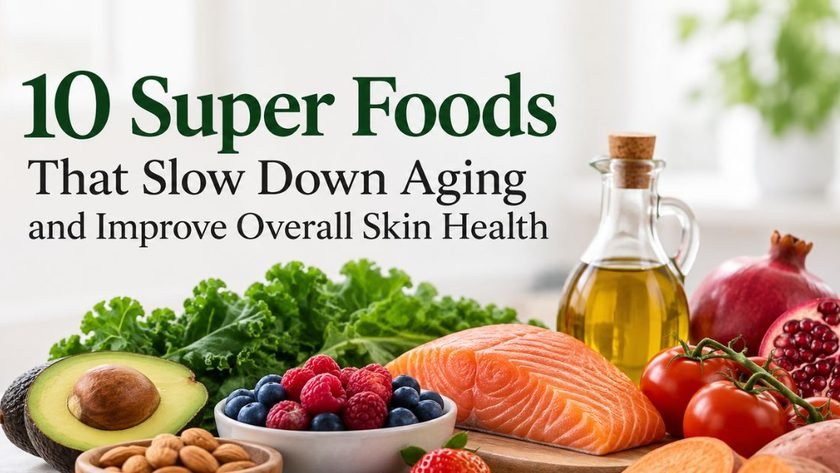
Berries, fatty fish, tomatoes, avocados, almonds, leafy greens, sweet potatoes, extra virgin olive oil, pomegranate, and cocoa all bring something useful to the table. What makes them powerful isn’t that any one of them can stop aging. It’s that together they provide the protein, healthy fats, vitamins, carotenoids, polyphenols, and other nutrients your skin and the rest of your body continue to need as you get older.
That is a far more realistic way to eat for younger-looking, healthier skin and for healthy aging well beyond what you see in the mirror.