

 Martha Alizo
Glass skin is usually associated with skin that looks smooth, hydrated, plump, and naturally dewy. And while the trend came largely from Korean skincare, you don’t need a 10-step Korean routine to get that kind of glow.
For Black women, I think the approach needs to be a little more thoughtful.
Deeper skin tones can be more prone to post-inflammatory hyperpigmentation, which means a breakout, irritation, or small injury can leave behind a dark mark long after the original problem is gone. That makes it especially important to build a routine that keeps your skin hydrated and protected instead of constantly irritating it with strong products.
The good news is that you don’t need dozens of products.
A solid routine can be built around six things: cleansing, exfoliating, hydrating, treating your main skin concern, moisturizing, and protecting your skin from the sun.
Here is how I would put those steps together.
1. Start with a proper nighttime cleanse
If you’ve spent the entire day wearing sunscreen, makeup, or skincare products, going straight to bed without properly cleansing your face isn’t doing your skin any favors.
This is where double cleansing can be useful.
The first cleanser is usually oil-based. Oil cleansers and cleansing balms are good at breaking down things that cling to the skin during the day, including makeup, sunscreen, excess sebum, and other buildup.
Once you’ve rinsed that away, use a gentle water-based cleanser. This can be a gel, foam, or cream cleanser depending on your skin type.
I personally like using an oil cleanser first and then following it with Cetaphil’s gentle cleanser. I’ve used that combination for more than two years without it causing me to break out.
You don’t necessarily need to double cleanse every morning. For me, it makes much more sense at night because that’s when I’m removing everything that has accumulated on my skin throughout the day.
If you don’t wear makeup or a heavy, water-resistant sunscreen, you may find that one gentle cleanser is enough. There is no prize for washing your face twice when once is doing the job.
The important thing is how your skin feels afterward. Your face should feel clean, but it shouldn’t feel painfully tight or stripped.
2. Exfoliate enough to smooth your skin, not enough to irritate it
Dead skin cells naturally build up on the surface of your skin. When too much buildup is present, your skin can look dull or feel rough, and clogged pores can become more noticeable.
Exfoliation can help with that.
Chemical exfoliants are usually the easiest option to work into a skincare routine. AHAs, such as glycolic or lactic acid, work mainly on the surface of the skin. BHAs, particularly salicylic acid, can travel into oily pores and are often useful for people dealing with blackheads and congestion.
I use a 2% salicylic acid at night, usually every other day, and only need a few drops for my entire face. I’ve been using it for more than a year and have noticed fewer blackheads and sebaceous filaments around my nose. My skin also feels smoother.
That doesn’t mean everyone should use salicylic acid every other day.
If you’re new to chemical exfoliation, start slowly. Once a week may be enough at first. You can increase the frequency if your skin tolerates it well.
This matters because irritation can be a problem for anyone, but it can be particularly frustrating when you’re already trying to deal with dark marks. If an exfoliant leaves your skin burning, excessively dry, peeling, or unusually sensitive, back off.
More exfoliation does not automatically mean faster results.
3. Give your skin that extra layer of hydration
I used to think toner was one of those skincare products that existed mainly because brands wanted to sell another bottle.
Then I actually started paying attention to what my skin needed.
A hydrating toner can be useful if your skin tends to feel dry or tight after cleansing. It gives you a lightweight layer of hydration before you move on to your serum and moisturizer.
You don’t need a toner simply because a skincare routine says you should have one. Modern cleansers are generally designed to be compatible with your skin’s natural barrier, so the old idea that everyone needs toner to “restore” their skin’s pH isn’t a good reason by itself to buy one.
Instead, look at what the product actually does.
Ingredients such as glycerin, hyaluronic acid, panthenol, and centella asiatica can help add hydration and make your skin feel softer and more comfortable.
If you have combination or oily skin, a lightweight toner can give you hydration without the heavy feeling of a thick cream. If your skin is dry, you may prefer something richer or simply use an extra layer of moisturizer instead.
Two options worth considering are:
- Centella toner if you want something focused on lightweight hydration and soothing.
- Paula’s Choice Skin Balancing Toner if you have oily or combination skin and want a lightweight formula.
And if you try a toner and don’t notice any difference, you can leave it out. Your routine isn’t failing because you don’t own one.
4. Let your serum target the problem you actually have
This is where I would avoid copying someone else’s entire skincare routine.
You don’t need five different serums because someone on TikTok has five different skin concerns.
Look at your own skin first.
If your main concern is hyperpigmentation or an uneven-looking skin tone, vitamin C can be a useful ingredient to consider. It is commonly used to brighten the appearance of dark spots and uneven tone.
If you’re more concerned about oiliness, enlarged-looking pores, or breakouts, niacinamide may be a better fit.
And if your biggest concern is dryness and rough-looking texture, a hydrating serum or essence containing ingredients such as hyaluronic acid can make more sense.
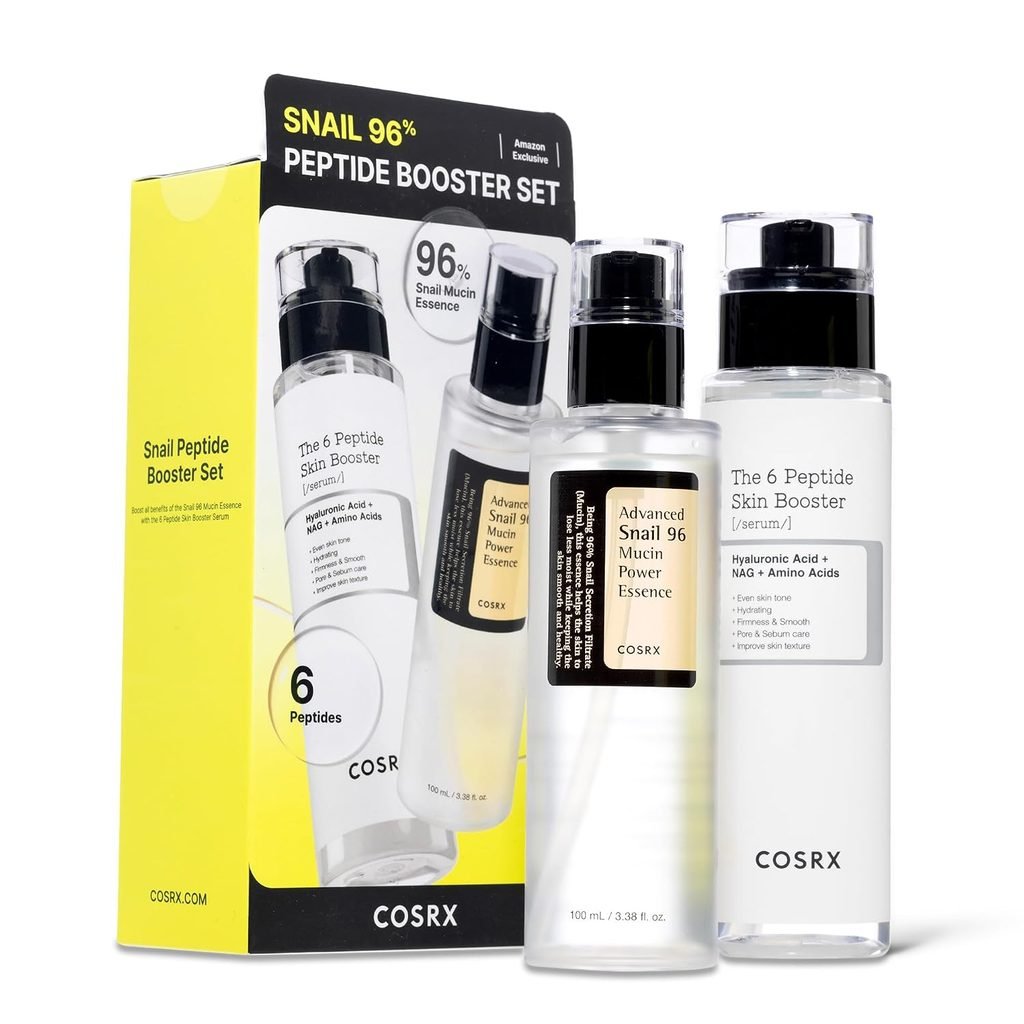
What about snail mucin?
Snail mucin, also known as snail secretion filtrate, is another ingredient you’ll see frequently in Korean skincare.
Snail Mucin is mainly used for its hydrating and moisturizing properties. It can leave the skin feeling softer and more plump, which fits nicely into a routine aimed at achieving that dewy glass-skin appearance.
It isn’t a miracle treatment for wrinkles or dark spots, though. Think of it primarily as a hydrating step rather than a cure-all.
If your skin is already happy with your cleanser, moisturizer, and sunscreen, you don’t need to add snail mucin just because it is popular.
Recommended Snail Mucin

The same goes for every other serum.
Pick one main concern, choose an appropriate product, and give your skin some time before adding something else. Introducing several new actives at once makes it much harder to figure out what is actually helping your skin—and what is irritating it.
5. Keep your skin barrier happy with a good moisturizer
If you have oily skin, you may have spent years trying to avoid moisturizer.
I understand the logic. Your face already looks shiny, so why would you want to put more moisture on it?
The problem is that oil and hydration are two different things.
Your skin can produce plenty of sebum and still become dehydrated. Skipping moisturizer can also leave your skin feeling tight or uncomfortable, especially if you’re using exfoliating acids or other treatments.
I also used to overlook this step until my dermatologist explained to me that oily skin still needs moisturization.
Now I pay much more attention to the ingredients in my moisturizer. Ceramides are among the ones I look for because they are naturally found in the outer layer of the skin and help support the skin barrier.
A good moisturizer should leave your skin comfortable rather than extremely greasy.
If you have oily or combination skin, you might prefer a lightweight lotion or gel moisturizer. If your skin is dry, you can go for a thicker cream.
And if you are using several active ingredients, don’t underestimate the value of a boring moisturizer. Sometimes your skin needs less experimenting and more barrier support.
6. Protect the glow you’ve been working on
You can have the best skincare routine in the world, but I would still put sunscreen at the top of your morning routine.
Black skin contains more melanin, which provides some natural protection against UV radiation. That does not mean Black women are protected from sun damage or that sunscreen is unnecessary.
Sunscreen also matters when hyperpigmentation is one of your concerns. Sun exposure can make existing pigmentation harder to manage, while visible light can also worsen certain types of hyperpigmentation in darker skin tones.
Look for a broad-spectrum sunscreen with at least SPF 30.
If you struggle with dark spots or melasma, a tinted sunscreen containing iron oxides may be worth considering because these formulas can provide protection against visible light as well.
The other issue is finding a sunscreen you will actually wear.
If a sunscreen leaves a gray or white cast on your skin, feels greasy, or makes you dread putting it on every morning, you’re less likely to use it consistently. Look for a formula that feels comfortable and works with your complexion.
I currently use La Roche-Posay, but you don’t have to use the same brand. The best sunscreen is one that gives you adequate protection and that you can comfortably use every day.
And don’t forget your neck. If you’re applying sunscreen to your face, bring it down onto your neck and other exposed areas too.
A glass-skin routine doesn’t have to mean six products
The six steps above are a framework, not a requirement to buy six new products tomorrow.
If you’re starting from scratch, I would actually keep things simple.
In the morning
Cleanse → serum (optional) → moisturizer → sunscreen
If your skin is dry and comfortable when you wake up, you may not need a cleanser in the morning. A gentle rinse followed by moisturizer and sunscreen can be enough for some people.
At night
Oil cleanser → gentle cleanser → exfoliant on selected nights → toner/essence (optional) → serum → moisturizer
You can adjust this depending on your skin.
For example, you don’t need to use your exfoliating acid every night. You also don’t need to use every serum you own in one routine.
Skincare should be something you can maintain, not a nightly chemistry experiment.
Don’t make hyperpigmentation worse while trying to get rid of it
This is especially worth remembering if you’re a Black woman trying to achieve a more even-looking complexion.
A pimple can disappear within days, but the dark mark it leaves behind can stick around for much longer. The same thing can happen after picking at your skin, irritating it with harsh products, or damaging the skin barrier.
That is why I wouldn’t recommend chasing quick results with aggressive exfoliation.
If a product constantly stings or burns, that isn’t necessarily evidence that it’s working. It may simply mean your skin is irritated.
Be patient with treatments for dark spots. Sunscreen is part of that process because preventing pigmentation from becoming darker in the first place is easier than constantly trying to correct it later.
And if you have persistent or severe pigmentation, acne, or another skin concern that isn’t improving, it is worth seeing a dermatologist rather than continuing to add stronger products.
The real secret to that glassy glow
You don’t need perfectly poreless skin to have beautiful skin.
Real skin has pores. It has texture. You may still get a breakout before your period or wake up with a random dark spot that wasn’t there yesterday.
The point of a glass-skin routine is to get your skin healthy-looking, hydrated, smooth, and comfortable, not to make it look like a filter.
Start with a gentle cleanser, use exfoliation carefully, add hydration, choose a treatment based on your actual concern, moisturize consistently, and protect your skin with sunscreen.
Then give the routine time.
Your skin doesn’t need to be constantly challenged. Sometimes the glow you’re looking for comes from doing the basics consistently and giving your skin a chance to settle down.




[…] MUST READ==> 6-Step Glass Skin Routine for Black Women […]
[…] MUST READ==> 6-Step Glass Skin Routine for Black Women […]
[…] MUST READ==> 6-Step Glass Skin Routine for Black Women […]
[…] ALSO READ==> 6-Step Glass Skin Routine for Black Women […]