
 Martha Alizo
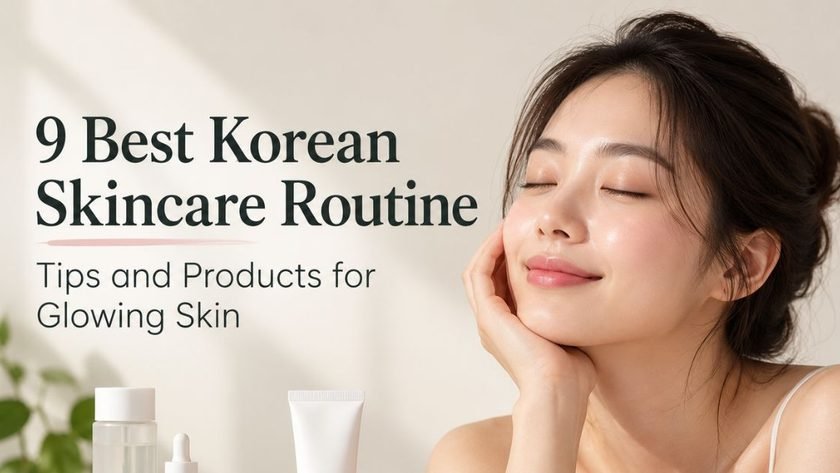
Korean skincare can look intimidating when you first come across routines with essences, ampoules, cleansing oils, sheet masks, toners, serums, and several other products layered one after another. But the part worth borrowing from K-beauty isn’t necessarily the number of bottles sitting on your bathroom shelf.
The basic idea is much simpler: cleanse without stripping your skin, keep it hydrated, treat the concerns you actually have, and protect it from the sun.
That last part matters especially if you’re trying to get that smooth, fresh-looking glow Korean skincare is known for. You can pile on hydrating products, but they won’t compensate for ongoing UV damage.
And no, you don’t need to follow a rigid 10-step routine every morning and night. Dermatologists point out that using too many products can irritate the skin, particularly when several active ingredients are involved. A Korean skincare routine works much better when you treat the steps as options and build a routine around your own skin.
Korean Skincare Routine: What You Need to Know
One thing Korean skincare does particularly well is layering hydration without relying on one very heavy product.
Instead of cleansing aggressively and then trying to fix the resulting dryness with a thick cream, many K-beauty routines use gentle cleansing followed by lightweight hydrating layers. A toner or essence might go first, followed by a serum and moisturizer. You don’t need all three, but the approach gives you plenty of room to adjust the routine to your skin.
The famous 10-step Korean skincare routine usually includes an oil cleanser, water-based cleanser, exfoliant, toner, essence, serum or ampoule, sheet mask, eye cream, moisturizer, and sunscreen. That doesn’t mean Korean women universally use ten products twice a day, nor does it mean your skin needs ten steps to be healthy. The routine is better thought of as a menu.
If you’re starting from scratch, I’d keep things much simpler.
A gentle cleanser, moisturizer, and sunscreen give you the foundation. From there, you can add one or two products based on what your skin needs: perhaps a hydrating essence for dryness, niacinamide for uneven-looking skin, or a retinoid at night if fine lines, texture, or acne are concerns.
Introduce new products gradually rather than changing your entire routine in one weekend. If irritation suddenly appears after you’ve added six new products, figuring out which one caused it becomes almost impossible.
MUST READ==> The essential skincare products you actually need for glowing skin in 2026
4 Korean Skincare Tips for Glowing Skin
1. Steam Massage
Facial massage feels good, and gently massaging your skin while cleansing can temporarily increase blood flow to the area. What it won’t do is permanently change your face, detox your skin, or create lasting improvements in circulation.
You also don’t need extremely hot steam.
Hot water and prolonged heat can leave some people’s skin dry, flushed, or irritated. If you like the steam from a warm shower, keep the temperature comfortable and use clean fingertips to gently massage your face rather than scrubbing it.
Try light circular motions across the forehead and cheeks, then move down toward the jaw. A minute or two is plenty.
Think of this as an optional part of your routine rather than a treatment your skin needs to glow. The products you use consistently — especially moisturizer and sunscreen — matter much more.
2. Don’t Forget Your Lips
Dry, flaky lips can make an otherwise healthy complexion look less polished, so lip care deserves a place in your routine too.
You don’t need anything elaborate. A plain moisturizing lip balm can help reduce water loss and keep the lips soft. If your lips are frequently dry, look for formulas containing occlusive or emollient ingredients such as petrolatum, shea butter, lanolin if you tolerate it, or plant-derived oils.
During the day, an SPF lip balm gives you sun protection as well. The American Academy of Dermatology recommends SPF 30 or higher for lips when you’re outdoors.
For the cosmetic side of things, a sheer lip tint or tinted balm can bring some color back to the face without requiring a full makeup look.
If your lips are already irritated, though, skip strongly fragranced, flavored, plumping, or tingling products until they’ve settled down. Sometimes the product you’re repeatedly applying to “fix” dry lips is part of what is keeping them irritated.
3. Go Easy on Cleansing
That squeaky-clean feeling isn’t a requirement for clean skin.
Over-cleansing or using a cleanser that’s too harsh can leave your face tight, dry, and uncomfortable. That’s almost the opposite of the soft, hydrated finish most people are trying to achieve with Korean skincare.
At night, cleansing makes sense because you’ve accumulated sunscreen, makeup, oil, sweat, and environmental debris throughout the day.
Morning cleansing is more individual.
If you have dry or sensitive skin and wake up without much oiliness, rinsing with lukewarm water may be enough. If you’re oily, acne-prone, sweat while sleeping, or simply prefer washing in the morning, use a gentle cleanser.
Pay attention to what your skin feels like afterward. Clean skin should not feel painfully tight.
Double cleansing is another K-beauty practice that can be useful without being compulsory. An oil or balm cleanser can help dissolve stubborn makeup and water-resistant sunscreen before a water-based cleanser removes what remains. But if one gentle cleanser already removes everything comfortably, you don’t earn extra skincare points for washing twice.
4. Always Wear Sunscreen
If glowing, even-looking skin is the goal, sunscreen belongs at the center of the routine rather than being treated as the boring final step.
Ultraviolet radiation contributes to premature skin aging and pigmentation and increases the risk of skin cancer. Daily sun protection also becomes especially relevant if you’re using products intended to improve dark spots or visible signs of sun damage.
Look for a broad-spectrum sunscreen with at least SPF 30 and use enough to adequately cover exposed skin. Reapply when you’re outdoors for extended periods, particularly after swimming or sweating.
Korean sunscreens have become popular partly because many are made with lightweight, cosmetically elegant textures that feel closer to a moisturizer or serum than traditional heavy sunscreen. That’s useful for one very practical reason: a sunscreen you enjoy wearing is easier to use consistently.
Don’t rely on sunscreen alone when you’re spending a lot of time outside. Shade, hats, sunglasses, and protective clothing reduce UV exposure too.
5 Korean Skincare Products to Invest In
You don’t need to buy an entire Korean skincare collection at once. If you’re replacing products or adding something new, these five categories give you a more practical place to start.
1. Beauty of Joseon Relief Sun: Rice + Probiotics SPF 50+ PA++++
If sunscreen is the product you tend to avoid because you dislike thick or greasy formulas, Beauty of Joseon’s Relief Sun is worth considering.
It’s a creamy Korean sunscreen with SPF 50+ and PA++++ protection and is designed to wear with a lightweight, moisturizing finish. The formula also contains rice-derived ingredients.
The texture makes it especially appealing if you prefer sunscreen that feels more like skincare than a traditional beach sunscreen. If your skin is already very oily, however, you may prefer one of the lighter gel or serum-style Korean sunscreens available.
Whichever sunscreen you choose, don’t let the search for a perfect formula delay actually wearing one.
2. Mediheal N.M.F Ampoule Mask
Sheet masks are one of the most recognizable parts of K-beauty, but they should be treated as optional extras rather than something your skin requires every night.
A hydrating mask such as Mediheal’s N.M.F mask can be useful when your skin feels particularly dry or you want an extra hydration step before an event. Sheet masks work largely by holding a hydrating formula against the skin for a short period.
That can make your skin temporarily look plumper and more dewy, which is exactly why they can be so satisfying to use.
Follow the time stated on the packaging rather than leaving a sheet mask on until it becomes completely dry. And if your skin is sensitive, check the ingredient list before assuming a product is gentle simply because it’s marketed as hydrating.
3. COSRX Advanced Snail 96 Mucin Power Essence
Essence is one of the product categories that often confuses people when they first get into Korean skincare.
There isn’t one universal definition, but an essence is generally a lightweight product applied after cleansing and toning and before heavier serums or creams. Many focus primarily on hydration.
COSRX Advanced Snail 96 Mucin Power Essence contains a high concentration of snail secretion filtrate and has a lightweight gel-like texture. It’s mainly useful as a hydrating step for people who enjoy layering moisture without applying another heavy cream.
Snail mucin doesn’t replace moisturizer, sunscreen, acne treatment, or a retinoid. Think of it as an optional hydrating product rather than the secret behind Korean “glass skin.”
And, naturally, anyone who doesn’t want to use snail-derived ingredients can choose a glycerin-, panthenol-, or hyaluronic-acid-based essence instead.
4. SKIN1004 Madagascar Centella Light Cleansing Oil
A cleansing oil makes the most sense in your evening routine when you wear makeup, water-resistant sunscreen, or products that aren’t coming off easily with your regular cleanser.
SKIN1004 Madagascar Centella Light Cleansing Oil is designed as a first cleanser and contains a mixture of plant-derived oils along with Centella asiatica.
Massage a small amount onto dry skin, add water to emulsify it, and rinse. You can then follow with a gentle water-based cleanser if needed.
If you’re acne-prone, don’t assume cleansing oils are automatically bad for your skin, but don’t assume every formula will suit you either. How well a cleanser rinses away and how your individual skin reacts matter more than the word “oil” on the bottle.
5. Anua Heartleaf 77 Soothing Toner
Modern Korean toners can be quite different from the harsh, alcohol-heavy astringents many people associate with the word “toner.”
Anua Heartleaf 77 Soothing Toner is a lightweight toner based around heartleaf extract and is intended to add a soothing, hydrating layer after cleansing.
Is toner necessary? No.
Your skin doesn’t need a toner simply to “rebalance its pH” after every wash, particularly if you’re already using a well-formulated gentle cleanser. Toner earns its place when the formula itself gives your skin something you want, whether that’s hydration, soothing ingredients, or a particular active.
If your moisturizer already leaves your skin comfortable and hydrated, skipping toner is completely reasonable.
ALSO READ==> 15 Collagen-Rich Foods for Anti Aging, Healthier, Younger-Looking Skin
Step-by-Step Morning Korean Skincare Routine
A morning routine doesn’t need to be long. Its main jobs are to leave your skin comfortable, address any specific concerns you have, and protect it from UV exposure.
Step 1: Cleanse your skin
Start with lukewarm water or a gentle cleanser.
Dry and sensitive skin may do perfectly well with a water rinse in the morning. Oily skin may feel better after cleansing. There isn’t one rule that works for everybody.
If your face feels tight immediately after washing, that’s a good reason to reconsider the cleanser, water temperature, or how often you’re washing.
Step 2: Use a toner
Toner is optional, but a hydrating Korean toner can be a nice first layer if your skin tends to feel dehydrated.
Apply it after cleansing and gently press it into the skin with clean hands or use a cotton pad if the product’s instructions call for one.
You don’t need to keep adding layer after layer unless your skin actually benefits from it.
Step 3: Apply essence
Essence typically comes next because it’s lighter than most serums and moisturizers.
This is where ingredients such as glycerin, hyaluronic acid, snail mucin, beta-glucan, or panthenol may help draw or hold water in the skin, depending on the formula.
Apply a thin layer and give it a moment to settle. Your face doesn’t need to be completely dry before you move on.
Step 4: Apply an ampoule
Ampoules are concentrated skincare products, but the term doesn’t automatically mean they’re stronger or more effective than every serum.
Treat the ingredient list and formulation as more meaningful than the product category.
You may not need an essence, ampoule, and serum in the same morning routine. If your ampoule already addresses your main concern, it may be the only treatment layer you need.
Step 5: Add your serum
This is where you can make the routine more specific to your skin.
For dull or uneven-looking skin, you might choose vitamin C or niacinamide. For dehydration, a humectant-rich serum can add another lightweight layer of moisture. If you’re managing a specific skin condition, your treatment may belong here instead.
Resist the temptation to combine every trending active at once.
Using too many products particularly multiple anti-aging or exfoliating treatments can irritate your skin rather than improve it.
Step 6: Use an eye cream
Eye cream is optional.
The skin around the eyes is thin and can become dry, but it isn’t true that this area cannot produce any moisture of its own. A regular gentle moisturizer can often be used around the eyes if it doesn’t sting or irritate them.
A separate eye product makes more sense if it contains an ingredient or texture you specifically want for that area.
Use a small amount and apply it gently. There’s no benefit to pulling or aggressively rubbing the skin.
Step 7: Apply moisturizer
Moisturizer helps reduce water loss and keeps the outer layer of the skin comfortable.
Choose the texture according to your skin rather than automatically reaching for the richest cream you can find.
Oily skin may prefer a lightweight gel cream or lotion. Dry skin often does better with a richer cream containing ingredients such as ceramides, glycerin, squalane, or other emollients.
Apply enough that your skin feels comfortable rather than coated.
Step 8: Finish with sunscreen
Sunscreen is your final skincare step in the morning.
Use a broad-spectrum SPF 30 or higher on exposed skin. If you’re going to be outdoors, reapplication matters too.
This is also one place where the order shouldn’t be reversed. Don’t put your moisturizer on top of sunscreen because you forgot it. Let sunscreen form the final protective layer before makeup. The American Academy of Dermatology recommends applying skincare treatments first, followed by moisturizer and/or sunscreen and then makeup.
ALSO READ==> 14 Anti-Aging Tips That Make You Look 10 Years Younger
Step-by-Step Nighttime Korean Skincare Routine
Night is where a Korean skincare routine can become a little more involved, especially if you wear makeup or sunscreen during the day.
You still don’t need every step every night.
Step 1: Start with an oil-based cleanser
If you’re wearing makeup or stubborn sunscreen, start with a cleansing oil or balm.
Massage it over dry skin to loosen makeup, sunscreen, and oily residue, then add water so the cleanser emulsifies before rinsing.
Pay particular attention around the hairline and sides of the nose, where products can easily be missed.
Step 2: Follow with a water-based cleanser
The second part of a traditional double cleanse uses a water-based facial cleanser.
Choose something gentle rather than assuming your second cleanser needs to foam heavily. Your goal is to remove remaining residue, not strip every trace of oil from your face.
And double cleansing isn’t mandatory. If one cleanser removes your sunscreen and makeup thoroughly and your skin feels clean afterward, you can stop there.
Step 3: Exfoliate when your skin needs it
Exfoliation can help with rough texture, clogged pores, and dull-looking surface skin, but “twice a week” shouldn’t be treated as a universal prescription.
How often you exfoliate depends on the product, its concentration, your skin type, and what else you’re using.
Chemical exfoliants such as AHAs and BHAs can be useful, but overusing them can leave skin stinging, peeling, or unusually sensitive. Physical scrubs can also irritate the skin when they’re used aggressively.
If you’re already using a retinoid, acne medication, or another exfoliating treatment, be particularly careful about stacking products.
More exfoliation does not mean more glow.
Step 4: Apply toner
After cleansing or exfoliating, you can apply a hydrating toner if you use one.
This is a good point to judge what your skin needs that evening. If it already feels sensitive, irritated, or unusually dry, a simple moisturizer may be smarter than continuing through another six products.
Step 5: Apply essence
Follow with your essence while your routine is still in its lighter, water-based stages.
A hydrating essence can help give dry skin that soft, slightly plumped appearance associated with a dewy finish. Apply a thin layer rather than soaking your face in product.
If you’re already happy with your toner and serum, this step can go.
Step 6: Use an ampoule if you need one
An ampoule can be used when its formula addresses something your other products don’t.
That might be hydration, soothing, uneven tone, or another cosmetic concern.
There’s no skincare rule saying ampoules must be used every night. Adding one simply because Korean routines traditionally include the category can turn a useful routine into an unnecessarily expensive one.
Step 7: Apply your serum or treatment
Night is a convenient time for targeted treatments.
If you’re using retinol, for example, it normally belongs in your nighttime routine. Retinoids can help with acne, uneven pigmentation, skin texture, fine lines, and wrinkles, although they can also cause dryness and irritation when you’re getting started.
Follow the directions for the specific treatment you’re using rather than assuming every serum can be layered together.
If you have persistent acne, rosacea, eczema, significant pigmentation, or another ongoing skin problem, a long cosmetic routine isn’t a substitute for appropriate medical treatment.
Step 8: Use a sheet mask occasionally
A sheet mask can replace some of your other hydrating layers on nights when you want one.
There’s little reason to apply toner, essence, ampoule, serum, and a serum-soaked sheet mask simply because they’re all listed in a traditional routine.
Choose a mask based on what your skin needs, leave it on for the recommended time, remove it, and gently press in the remaining product.
Sheet masks can make dehydrated skin look temporarily plumper and fresher, but they’re not among the strongest treatments for skin aging. Consistent sun protection and evidence-based ingredients such as retinoids have much better support for addressing visible photoaging.
Step 9: Apply eye cream
If you use eye cream, apply a small amount around the orbital area without rubbing aggressively.
This can be particularly helpful if the skin around your eyes feels dry and your regular facial moisturizer isn’t comfortable there.
Otherwise, this is another perfectly reasonable step to skip.
Step 10: Finish with moisturizer
Your nighttime moisturizer goes near the end because it provides the more occlusive layer that helps reduce water loss while you sleep.
Dry skin may benefit from a richer cream at night. Combination and oily skin may prefer a lighter lotion or gel cream. Ingredients such as glycerin and hyaluronic acid can help with hydration, while ceramides and emollients can support the skin barrier.
And that’s really the point of building a Korean skincare routine: not reaching ten steps, but finding a routine your skin actually likes.
If yours turns out to be cleanser, serum, moisturizer, and sunscreen, that’s fine. If your dry skin loves toner, essence, and an extra hydrating layer, keep them. The glow you’re after is more likely to come from months of gentle cleansing, consistent hydration, sensible treatment, and daily sun protection than from trying to squeeze every K-beauty category onto your face at once.



[…] MUST READ==> 9 Best Korean Skincare Routine Tips and Products for Glowing Skin […]