
 Martha Alizo
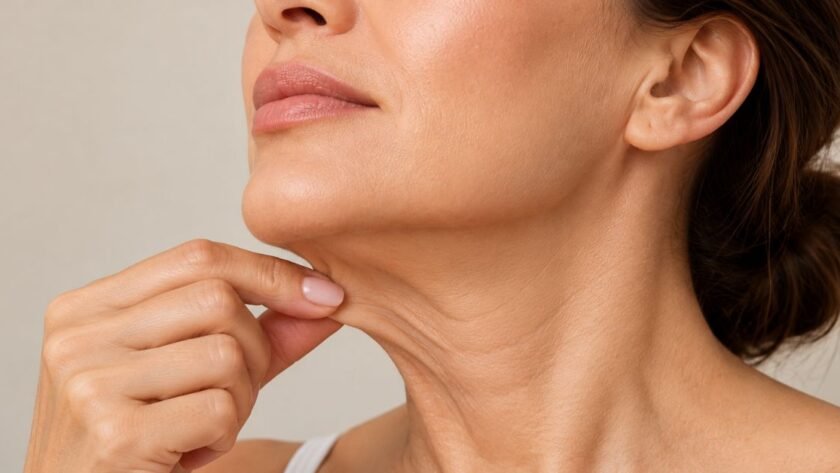
You might spend plenty of time caring for your face, only to notice that the skin around your neck looks looser, thinner, or more wrinkled than you’d like. Maybe you’re starting to see horizontal neck lines, or the skin beneath your chin doesn’t look as firm as it used to.
These changes are common as you get older, but aging isn’t the only reason your neck can start looking different. Sun exposure, weight changes, genetics, and even how you hold your head throughout the day can affect its appearance.
If you’re wondering how to tighten your neck skin naturally, there are several things worth trying at home. Some can improve hydration and make fine lines less noticeable, while others help protect the collagen that keeps your skin firm.
The results depend on what’s causing the looseness. Natural skincare can improve the appearance of your neck, but it can’t completely tighten significant amounts of stretched or sagging skin.
Here’s what can help, what probably won’t make much difference, and how to care for your neck without spending money on treatments that don’t work.
Why Does My Neck Look Older?
The skin on your neck is relatively thin and has fewer oil-producing glands than many areas of your face. This makes it more prone to dryness and can cause fine lines and changes in texture to become noticeable.
Your neck also depends on collagen and elastin to maintain its firmness and flexibility.
Collagen gives your skin structure, while elastin allows it to stretch and return to its original shape. As you age, changes in these proteins make your skin less resilient. The effects become more noticeable when combined with years of sun exposure.
Several factors can make your neck appear older:
- Natural aging: Your skin gradually loses collagen, elasticity, and some of the underlying fat that helps it look smooth.
- Sun exposure: Ultraviolet radiation damages collagen and elastin, contributing to wrinkles, uneven pigmentation, and loose-looking skin.
- Weight fluctuations: Losing a substantial amount of weight can leave excess skin around the neck, particularly when the skin has already lost some elasticity.
- Genetics: Some women naturally develop neck wrinkles or loose skin earlier than others.
- Repeated neck movements: Frequently looking down at your phone or laptop may make horizontal neck creases more noticeable.
- Menopause: Declining estrogen levels can contribute to thinner, drier skin and changes in collagen.
You may also notice vertical bands running down the front of your neck. These are associated with the platysma, a thin muscle that extends from the lower face into the neck.
Understanding which changes you’re dealing with helps you choose the right approach. Dry, crepey skin often responds well to moisturizing, while loose folds of excess skin are much harder to improve with skincare alone.
Key Takeaways
- Natural skincare can improve neck hydration, texture, and the appearance of fine lines, but it won’t remove significant excess skin.
- Daily sunscreen and carefully introduced retinol are among the better-supported ways to care for aging neck skin.
- Gentle massage, facial oils, and homemade masks may make skin feel softer, although evidence that they tighten loose skin is limited.
- A healthy diet, stable weight, and avoiding smoking can help protect your skin as it ages.
- Dermatological treatments may provide more noticeable improvement when sagging is moderate or severe.
MUST READ==> How to Get Rid of Open Pores on Your Face
Is It Possible to Tighten the Neck Skin?
Yes, but the amount of improvement you can expect depends on your skin’s condition and the method you use.
If your neck looks crepey because it’s dry, moisturizing regularly can make it appear smoother and slightly fuller. Fine lines may become less noticeable once the skin is properly hydrated.
Retinoids can also help improve the appearance of some wrinkles over time by encouraging collagen production.
However, there’s a difference between improving the surface of your skin and physically lifting loose tissue.
According to the American Academy of Dermatology, skin-firming creams generally produce subtle results at best. Moisturizers can temporarily plump the skin, but topical products cannot lift substantial sagging because they don’t reach deeply enough to reposition the underlying tissue.
The same limitation applies to many popular home remedies.
Massaging your neck, applying natural oils, or using homemade masks may improve how your skin feels and looks temporarily. None has convincing clinical evidence that it can permanently tighten significant loose neck skin.
That doesn’t mean caring for your neck is pointless. Consistent skincare can improve dryness, roughness, and the appearance of early wrinkles while helping prevent further sun-related damage.
Natural Ways to Tighten Your Neck Skin
1. Hot Stone Massage
A warm stone massage may feel relaxing, especially if you carry tension around your neck and shoulders.
The combination of warmth and gentle massage can temporarily increase circulation near the skin’s surface. However, there’s no reliable evidence that hot stones stimulate enough collagen production to tighten sagging neck skin.
Heat also needs to be handled carefully. The neck is sensitive, and a stone that’s too hot can cause burns.
If you enjoy massage, a warm compress followed by gentle hand massage is a safer home option.
How to do it:
- Soak a clean, soft washcloth in comfortably warm water.
- Wring out the excess water and place the cloth against your neck for a few minutes.
- Remove the cloth and apply a small amount of moisturizer or facial oil.
- Using your fingertips, gently glide over the skin without pulling or stretching it.
- Stop if you notice redness, irritation, or discomfort.
You can do this occasionally as part of your evening routine.
Avoid applying intense heat or pressing firmly over the front of your neck. A gentle massage is enough.
2. Almond Oil Massage
Almond oil is a popular natural moisturizer, particularly for dry skin.
Sweet almond oil contains fatty acids that help soften the skin and reduce moisture loss. When applied regularly, it may make dry neck skin feel smoother and more comfortable.
It’s worth separating these moisturizing benefits from claims about skin tightening.
Although almonds contain vitamin E, applying almond oil to your neck hasn’t been shown to rebuild enough collagen to lift loose skin. Its main benefit is helping the skin retain moisture.
How to use almond oil on your neck:
- Clean your neck with a gentle cleanser and pat it slightly dry.
- Place two or three drops of sweet almond oil between your palms.
- Spread the oil gently over your neck and upper chest.
- Massage lightly for about a minute, avoiding excessive pulling.
- Leave it on if your skin tolerates it well.
You can use almond oil in the evening or apply a small amount over your regular moisturizer.
If you have an almond allergy, avoid almond oil unless your healthcare professional confirms that the particular product is safe for you.
Choose plain, cosmetic-grade sweet almond oil rather than essential oils or strongly fragranced blends.
3. Exercise
Neck exercises are often recommended for sagging skin, particularly when someone wants to improve the appearance of a double chin or what is sometimes called a turkey neck.
These exercises work the muscles around your neck and jaw. They may help improve posture, movement, and muscle control, but evidence that they can tighten loose skin is limited.
Skin and muscle are different tissues. Strengthening a muscle doesn’t necessarily make the skin covering it shrink.
Still, gentle neck exercises can be useful if you spend long hours looking down at your phone or sitting at a computer.
Exercise 1: Chin tucks
This movement helps improve head and neck posture.
- Sit upright with your shoulders relaxed.
- Look straight ahead.
- Slowly draw your chin backward, as though you’re making a gentle double chin.
- Keep your head level rather than tilting it downward.
- Hold for three to five seconds, then relax.
- Repeat five to ten times.
Exercise 2: Gentle neck extension
- Sit comfortably with your back supported.
- Slowly look upward, moving only as far as feels comfortable.
- Hold briefly without forcing your neck backward.
- Return to your starting position.
- Repeat a few times.
Avoid this movement if it causes pain, dizziness, or discomfort.
Exercise 3: Shoulder blade squeezes
- Sit or stand upright.
- Relax your shoulders.
- Gently bring your shoulder blades toward each other.
- Hold for five seconds.
- Release and repeat ten times.
This exercise helps counter the rounded-shoulder posture that often accompanies prolonged phone or computer use.
These movements won’t remove loose neck skin, but they may help you maintain more comfortable posture and reduce neck stiffness.
There’s also no good evidence that chewing gum repeatedly prevents a double chin or tightens sagging skin. Excessive chewing can aggravate jaw discomfort in some people.
4. Neck Masks
Homemade neck masks can be a pleasant addition to your skincare routine, especially when your skin feels dry.
Their main benefit is temporary hydration and softness.
Ingredients such as cucumber, banana, and honey contain water or compounds that may help condition the skin, but there’s little clinical evidence that homemade masks can tighten loose neck tissue.
If you enjoy natural skincare, these two simple options are worth considering.
Cucumber Mask
Cucumber has a high water content and can feel cooling when applied to the skin.
A cucumber mask may temporarily refresh dry or uncomfortable skin, although it won’t restore lost collagen or remove wrinkles.
You will need:
- Half a fresh cucumber
- One teaspoon of plain, unsweetened yogurt, if tolerated
What to do:
- Wash and peel the cucumber.
- Blend or grate it until it forms a soft mixture.
- Mix in the yogurt if you’re using it.
- Apply a thin layer to clean neck skin.
- Leave it on for approximately 10 minutes.
- Rinse with lukewarm water and apply moisturizer.
How often should you use it?
Once or twice a week is reasonable if your skin tolerates it.
Patch-test the mixture first. Even natural ingredients can cause irritation, particularly on sensitive skin.
Banana Mask
Mashed banana has a soft texture that makes it easy to use in homemade skincare.
Mixed with a little honey, it can act as a temporary conditioning mask. Honey also has humectant properties, meaning it can help attract and retain moisture.
However, applying banana to your skin hasn’t been shown to increase collagen production or tighten sagging tissue.
You will need:
- Half a ripe banana
- One teaspoon of honey
What to do:
- Mash the banana until smooth.
- Mix in the honey.
- Spread a thin layer over your clean neck.
- Leave it on for 10 to 15 minutes.
- Rinse thoroughly with lukewarm water.
- Finish with your regular moisturizer.
How often should you use it?
Try it once a week if you enjoy homemade masks and don’t experience irritation.
Avoid honey if you’re allergic to it, and don’t apply food-based masks to broken or inflamed skin.
If your main concern is dry, crepey neck skin, a fragrance-free moisturizer containing glycerin, ceramides, or hyaluronic acid is generally a more practical and predictable choice than homemade masks.
ALSO READ==> 9 Effective Ways to Get Rid of Pimples Overnight
Tips to Keep Your Neck Looking Younger
1. Take Collagen
Collagen supplements are frequently marketed as a way to improve skin firmness and reduce wrinkles.
Most contain hydrolyzed collagen, which has been broken into smaller peptides that are easier to digest.
Some clinical trials have reported improvements in skin hydration and elasticity after several weeks of supplementation. However, findings are mixed, and many studies have limitations, including small sample sizes, industry funding, or products containing multiple active ingredients.
There’s also a lack of strong evidence that taking collagen specifically tightens sagging neck skin.
If you’re considering a supplement, it’s worth understanding that the collagen you swallow doesn’t travel directly to the wrinkles on your neck. Your digestive system breaks it down, and your body uses the resulting amino acids and peptides in various ways.
You can also support normal collagen production through your diet.
Foods worth eating regularly include:
- Fish, eggs, poultry, and other protein sources
- Citrus fruits, strawberries, kiwi, and bell peppers for vitamin C
- Nuts and seeds
- Beans and lentils
- Leafy green vegetables
Protein supplies amino acids needed for tissue maintenance, while vitamin C is required for normal collagen synthesis.
Collagen supplements aren’t necessary for everyone. If you choose to use one, check its ingredients and possible allergens, particularly if it’s derived from fish or shellfish.
2. Avoid Perfumes on Your Neck
Spraying perfume directly onto your neck is a habit worth reconsidering if your skin is easily irritated.
Fragrances are a common cause of allergic contact dermatitis, and some perfume formulas contain alcohol that can temporarily dry the skin.
Repeated irritation can leave your neck looking red, flaky, or uneven in tone. Certain fragrance ingredients can also cause reactions when exposed to sunlight.
This doesn’t mean perfume automatically causes wrinkles or destroys collagen. The concern is irritation, especially when your skin is already sensitive.
Try applying fragrance to clothing where appropriate, or to another area that tolerates it well.
If your neck becomes itchy, develops a rash, or feels uncomfortable after using perfume, stop applying the product there.
3. Use Vitamin C
Vitamin C is one of the more useful skincare ingredients to consider if your neck has early signs of sun damage.
Your body needs vitamin C to produce collagen. When applied topically in a suitable formulation, it also acts as an antioxidant, helping protect the skin from damage caused by free radicals.
Some topical vitamin C products can improve the appearance of uneven pigmentation and fine lines with consistent use.
That makes vitamin C particularly useful if your neck has a combination of mild wrinkles, dullness, and sunspots.
How to use vitamin C on your neck:
- Cleanse your skin gently in the morning.
- Apply a small amount of vitamin C serum to your neck.
- Follow with moisturizer.
- Finish with broad-spectrum sunscreen.
Start with a gentle formula if your skin is sensitive. Strong vitamin C products, especially acidic formulations, can cause stinging or irritation.
You don’t need to use the highest concentration available.
Vitamin C is helpful for overall skin appearance, but it won’t lift loose folds of skin or replace sunscreen.
4. Exfoliate Your Skin
Exfoliation removes dead skin cells from the surface, which can make your neck feel smoother and look less dull.
It may be useful if you notice rough patches, uneven texture, or a buildup of dry, flaky skin.
However, exfoliation doesn’t directly tighten loose skin.
The neck can be more sensitive than the face, so harsh scrubs and frequent exfoliation may do more harm than good.
If you want to exfoliate, consider a gentle product containing lactic acid or another mild exfoliating ingredient.
How to exfoliate your neck safely:
- Start no more than once a week.
- Use a mild product rather than a rough scrub.
- Avoid applying exfoliating acids to irritated or broken skin.
- Follow with a fragrance-free moisturizer.
- Use sunscreen during the day.
Don’t combine a new exfoliating acid with retinol on the same night until you know how your skin responds.
If your neck is already dry, sensitive, or irritated, you may be better off skipping exfoliation altogether.
5. Moisturize Your Skin
Moisturizing is one of the simplest ways to improve the appearance of dry, crepey neck skin.
As your skin loses moisture, fine lines can become more noticeable. A moisturizer helps reduce water loss and makes the surface look smoother.
The effect is especially noticeable when dryness is contributing to the wrinkled appearance.
According to Cleveland Clinic, ingredients such as hyaluronic acid can improve hydration, while retinoids and topical antioxidants may help address other visible signs of neck aging.
Look for moisturizers containing ingredients such as:
- Hyaluronic acid: Helps attract water and temporarily plump the skin.
- Glycerin: Draws moisture into the outer skin layers.
- Ceramides: Help maintain the skin’s protective barrier.
- Petrolatum: Reduces moisture loss, making it useful for very dry skin.
- Dimethicone: Helps soften the skin and reduce water loss.
You don’t necessarily need a separate neck cream. A well-formulated facial moisturizer can work perfectly well on your neck and upper chest.
Apply it after washing, while your skin is still slightly damp.
Don’t Skip Sunscreen
If you want your neck to look younger for longer, daily sun protection deserves just as much attention as moisturizing.
UV exposure contributes to collagen damage, wrinkles, uneven pigmentation, and loss of firmness.
The American Academy of Dermatology recommends broad-spectrum, water-resistant sunscreen with SPF 30 or higher for exposed skin.
Apply sunscreen to your neck, the area beneath your chin, and your upper chest when they’re exposed.
Reapply approximately every two hours while outdoors, and after swimming or heavy sweating.
Sunscreen won’t remove existing loose skin, but it can help prevent additional sun-related aging.
Consider Adding Retinol
Retinol is another ingredient worth considering if you’re dealing with early neck wrinkles.
It’s a vitamin A derivative that can improve skin texture and fine lines over time.
Because the neck is prone to irritation, start with a low-strength formula rather than applying a strong facial retinoid immediately.
Use it once or twice a week at night initially, followed by moisturizer. Increase the frequency gradually if your skin tolerates it.
Visible improvements generally take several months.
Avoid retinoids during pregnancy, and seek professional guidance if you’re breastfeeding. If you have eczema or easily irritated skin, consult a dermatologist before introducing one.
6. Manage Your Weight
Weight changes can affect how firm your neck looks.
When you gain weight, the skin around your neck and beneath your chin may stretch as the underlying fat increases.
If you later lose a significant amount of weight, your skin may not completely return to its previous shape.
How much it tightens depends on your age, genetics, the amount of weight lost, and how long the skin was stretched.
This is one reason some women notice loose skin beneath their chin after weight loss, even when they’re happy with their overall results.
Maintaining a stable, healthy weight can help reduce repeated stretching of the skin.
If you’re working toward weight loss, aim for a sustainable approach rather than rapid changes driven by restrictive diets.
A balanced diet that provides enough protein, regular physical activity, and adequate sleep supports general health and normal tissue maintenance.
Strength training can help preserve muscle during weight loss, although it won’t directly remove excess neck skin.
Smoking is another factor worth addressing. It accelerates visible skin aging and contributes to collagen damage.
Drinking enough water supports normal body function and helps prevent dehydration, but drinking extra water won’t specifically eliminate a double chin or tighten stretched skin.
ALSO READ==> How to Get Rid of Blackheads on Your Chin Naturally
How to Tighten Your Neck Skin: Medical Options
Home skincare can make your neck look smoother, but significant sagging sometimes requires treatment that works beneath the skin’s surface.
If you’ve been consistent with skincare and still have loose folds beneath your chin or along your jawline, a dermatologist or plastic surgeon can help you understand your options.
The right treatment depends on whether the main concern is loose skin, excess fat, prominent neck muscles, or a combination of these.
1. Ultherapy
Ultherapy is a noninvasive treatment that uses focused ultrasound energy to heat selected layers beneath the skin.
The controlled heating encourages a wound-healing response and new collagen production.
It’s commonly used to treat mild to moderate skin laxity around the neck, jawline, and beneath the chin.
Results develop gradually, often over several months, as collagen remodeling occurs.
Some people experience noticeable improvement in firmness, while others see only subtle changes.
The procedure can cause discomfort, temporary swelling, tenderness, or other adverse effects. Rare but more serious complications are possible, so treatment should be performed by an appropriately trained professional.
It won’t provide the same degree of tightening as surgery when substantial excess skin is present.
2. Lower Rhytidectomy or Neck Lift
A neck lift is a surgical option for people with more pronounced sagging.
Depending on the individual, the surgeon may remove excess skin, adjust underlying tissues, and tighten or reposition the platysma muscle.
A neck lift may be performed alone or together with a lower facelift.
Unlike skincare products, surgery can physically remove loose skin and reshape the neck contour.
However, it involves recovery time and risks, including bleeding, infection, scarring, nerve injury, and complications related to anesthesia.
Results can be long-lasting, although natural aging continues after surgery.
A consultation with a qualified plastic surgeon is necessary to determine whether surgery is appropriate.
3. Radiofrequency Skin Tightening
Radiofrequency treatments use controlled energy to heat tissue beneath the skin’s surface.
This can stimulate collagen remodeling and gradually improve the appearance of mild to moderate skin laxity.
Radiofrequency treatments are used on the face and neck, although outcomes depend on the device, treatment settings, and individual skin characteristics.
Some treatments require multiple sessions.
The Cleveland Clinic describes radiofrequency tightening as a nonsurgical option that can improve skin firmness, with results that are generally less dramatic than surgery and may require maintenance.
Temporary redness, swelling, or tenderness can occur. Burns, pigment changes, and other complications are possible, particularly with poorly performed treatments.
People with darker skin tones should ask about the practitioner’s experience treating their skin type and the risk of post-inflammatory hyperpigmentation.
At-home radiofrequency devices should not be assumed to have the same effectiveness or safety profile as professionally administered treatments.
6 Natural Ways to Care for Your Neck Skin
You don’t need a complicated routine to start caring for your neck.
If your main concerns are dryness, early wrinkles, and preventing further skin aging, these six habits are a practical place to begin.
- Wear sunscreen every day. Protect exposed neck skin with broad-spectrum SPF 30 or higher.
- Moisturize morning and night. Choose a product containing glycerin, ceramides, or hyaluronic acid.
- Introduce retinol carefully. A low-strength formula may gradually improve fine lines if your skin tolerates it.
- Eat a balanced diet. Include adequate protein and vitamin C to support normal collagen production.
- Maintain a stable weight. Avoid repeated, substantial weight fluctuations when possible.
- Be gentle with your neck. Avoid harsh scrubs, excessive pulling, and irritating fragrances.
A simple morning routine could consist of a gentle cleanse, moisturizer, and sunscreen. You can add vitamin C if you want to address uneven tone or early sun damage.
At night, cleanse and moisturize again. If you’re using retinol, apply it according to the product instructions and gradually increase use as tolerated.
Consistency matters more than buying an expensive collection of neck creams.
You may notice improved hydration within days, but changes in fine lines generally take longer. Significant sagging is unlikely to disappear with skincare alone.