
 Martha Alizo
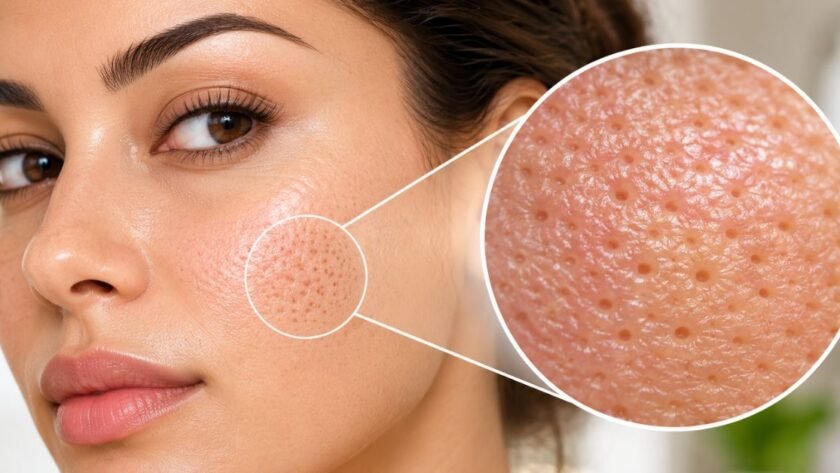
Visible pores can be frustrating, especially when they seem much more obvious around your nose, cheeks, forehead, or chin. They may stand out even more when your skin gets oily or when blackheads and clogged pores start collecting in the same areas.
One thing needs clearing up first: pores don’t literally open and close like tiny doors, and you can’t permanently erase them. Their size and visibility are influenced by several things, including genetics, oil production, the size of the hair follicle, acne, sun exposure, and the gradual loss of skin elasticity that comes with age.
What you can do is make enlarged pores look less noticeable. Keeping them clear, controlling excess oil, protecting your skin from UV damage, and using ingredients that improve skin texture can make a real difference.
And despite how often kitchen remedies are recommended online, some popular DIY treatments can irritate your skin rather than improve it. So, we’ll separate the gentler options from the ones I’d leave in the kitchen.
What Are Open Pores?
Pores are normal openings in your skin associated with hair follicles and glands. Sebaceous glands release sebum through follicles, while sweat reaches the skin through sweat-gland openings.
When people talk about “open pores,” they usually mean facial pores that have become easy to see.
Enlarged pores aren’t usually a medical problem. They’re mainly a cosmetic concern. Research suggests that three major factors contribute to their appearance: high sebum production, reduced elasticity around the pore, and larger hair follicles. Acne, hormones, age, and skincare habits can influence them too.
There’s also an important difference between an enlarged pore and a clogged one.
When dead skin cells, sebum and other material collect inside a follicle, it can become congested. A clog at the opening can form a blackhead, while a blockage beneath the surface can form a whitehead. Because congestion can stretch or accentuate the follicular opening, clogged pores often look larger.
So the goal isn’t really to “close” your pores. It’s to keep them from becoming clogged and make their appearance less obvious.
What Causes Open Pores?
Genetics
Some people naturally have more visible pores than others. Genetics has a strong influence on pore size, which is one reason two women can follow similar skincare routines and still have very different-looking skin.
You can’t change the pore structure you inherited, but you can manage some of the factors that make those pores more noticeable.
Sun Exposure
Years of unprotected UV exposure damage collagen and other structures that help keep skin firm. As the skin loses some of that support, pores can become more obvious.
This is one of the less glamorous reasons sunscreen belongs in a pore-focused skincare routine.
Age
Collagen and elastin provide structural support to the skin. Their gradual decline with age can make the skin less firm around follicular openings, making pores appear wider.
This is why someone who never worried about visible pores in her twenties may begin noticing them later.
Excessive Oil Secretion
Oilier skin tends to have more noticeable pores, particularly through the T-zone and central face where sebaceous glands are more concentrated.
Excess sebum can also mix with dead skin cells and contribute to congestion. Keeping oily pores clear can therefore make them look less prominent even though you haven’t physically changed their permanent size.
Clogged Pores and Acne
Blackheads, whiteheads and acne can make pores much easier to see.
Blackheads are particularly misunderstood. The dark material isn’t dirt. A blackhead develops when material inside an open comedone is exposed to air and oxidizes.
Trying to squeeze everything out can make matters worse. Aggressive extraction can injure the skin and cause scarring, so gentle chemical exfoliation is usually a better long-term strategy.
Hormonal Changes
Hormones affect sebaceous-gland activity, which explains why pore visibility and oiliness can change during puberty and at different points in the menstrual cycle.
If very oily skin appears alongside persistent or severe acne, treating the acne itself will usually be more useful than repeatedly applying pore-tightening masks.
Skincare Products
Heavy or comedogenic products can contribute to clogged pores in acne-prone skin. Cleveland Clinic recommends choosing products labelled “non-comedogenic” or “oil-free” when congestion is a problem.
Over-cleansing isn’t the answer either. Scrubbing aggressively can irritate and inflame the skin, which may actually make pores appear more noticeable.
MUST READ==> How to Get Rid of Blackheads on Your Chin Naturally
Home Remedies for Open Pores
This is where pore advice gets messy.
A lot of home remedies promise to shrink, tighten or close pores. Some may temporarily make oily skin feel cleaner or tighter. That isn’t the same as permanently changing pore size.
More importantly, “natural” doesn’t automatically mean gentle enough for facial skin.
If you want to experiment with home care, keep expectations realistic and avoid treatments that burn, sting or leave your skin red.
1. Aloe Vera
Aloe vera is commonly recommended as a home treatment because it feels cooling and hydrating on the skin. It won’t physically shrink your pores, but hydration can improve the general appearance and feel of your skin.
If you’d like to use it, a commercially prepared, fragrance-free aloe gel is easier to control than repeatedly cutting leaves from a plant. Apply a thin layer to clean skin and stop using it if you develop itching, burning or redness.
Don’t expect aloe alone to treat persistent blackheads, acne or significantly enlarged pores.
2. Egg White
Egg-white masks have been used for years because drying egg white leaves the skin feeling temporarily tight.
That tightening sensation is probably the biggest reason the remedy has developed a reputation for “closing pores.” It shouldn’t be confused with a lasting reduction in pore size.
I wouldn’t mix egg white with lemon juice, which is another common DIY recipe. Citrus ingredients can irritate skin, and citrus compounds followed by UV exposure can trigger phototoxic skin reactions in some circumstances.
There are better-supported ways to manage visible pores without putting raw egg and lemon on your face.
3. Apple Cider Vinegar
Apple cider vinegar is often promoted as a homemade toner, but I wouldn’t consider it necessary for treating enlarged pores.
Healthy adult skin is already mildly acidic, at around pH 5.5. Pushing skin too far toward either end of the pH scale can interfere with the skin barrier and contribute to dryness, irritation and inflammation.
If you’re trying to exfoliate congested pores, a properly formulated salicylic-acid product gives you a known skincare ingredient in a product designed specifically for skin.
4. Olive Oil
Olive oil may soften dry skin, but that doesn’t make it a pore treatment.
If enlarged pores are occurring alongside oily or acne-prone skin, applying facial oils isn’t necessarily the direction I’d take. Cleveland Clinic specifically advises people prone to clogged pores to avoid applying oils such as olive oil directly to the face.
A lightweight, non-comedogenic moisturizer is a more predictable way to keep skin comfortable without deliberately adding a heavy layer of oil.
5. Yogurt
Plain yogurt contains lactic acid, which explains why it frequently appears in DIY exfoliating masks. But the concentration, acidity and consistency of food-grade yogurt aren’t standardized as skincare treatments.
If lactic acid interests you, use a cosmetic product formulated with an appropriate concentration instead. Lactic acid is an alpha-hydroxy acid used in skincare to exfoliate and smooth rough texture.
That gives you considerably more control than applying food to your face.
6. Tomato
Tomato pulp is another traditional remedy said to “tighten” pores and control oil.
There isn’t good evidence that rubbing tomato on your face permanently reduces pore size. If you enjoy an occasional simple mask and your skin tolerates it, that’s different from treating it as a proven pore treatment.
For oil and congestion, ingredients such as salicylic acid have much stronger support.
7. Tea Tree Oil
Tea tree oil is often included in acne-focused DIY routines because of its antimicrobial properties, but essential oils can also cause irritation or allergic contact dermatitis in some people.
Never apply undiluted tea tree essential oil directly to your face.
And if your main concern is simply large pores rather than acne, there isn’t a compelling reason to use it. Treat the actual issue rather than adding another potentially irritating ingredient to your routine.
8. Banana
Banana peel is sometimes rubbed over the face with claims that its antioxidants and nutrients will tighten pores.
There’s no convincing evidence that banana peel meaningfully reduces enlarged facial pores.
Eating the banana will give you a much more predictable nutritional benefit than expecting its peel to remodel your pores.
9. Cucumber
Cool cucumber can feel soothing and refreshing, especially when your skin feels warm.
That’s fine as long as your skin tolerates it.
What I’d skip is the common cucumber-and-lemon combination. Adding lemon doesn’t turn cucumber into a better pore treatment and introduces an unnecessary source of irritation and possible photosensitivity. Citrus on the skin followed by sun exposure can cause phototoxic reactions and subsequent pigmentation.
This is especially worth avoiding if you’re already prone to dark marks after inflammation.
10. Besan
Besan, or gram flour, is widely used in homemade face packs.
Its main practical effect in this context is cleansing and physical exfoliation. If you use it, don’t scrub aggressively. Pore-prone skin doesn’t need to be polished until it feels squeaky clean.
Inflammation from harsh scrubbing can make texture and pores look worse.
A gentle cleanser and properly formulated exfoliant are more predictable choices if congestion is the problem.
11. Baking Soda
This is one DIY pore treatment I’d skip.
Baking soda is alkaline, while healthy facial skin is mildly acidic. Disrupting the skin’s normal pH can interfere with barrier function and contribute to dryness, redness and irritation.
You don’t need baking soda to exfoliate your face.
If you’re trying to remove dead skin and clear congested pores, salicylic acid or an appropriate alpha-hydroxy acid gives you a much more controlled approach.
12. Multani Mitti
Multani mitti, also called fuller’s earth, is commonly used as an oil-absorbing clay mask.
This is one home approach that can make sense for very oily skin, provided you treat it as an oil-control mask rather than something that permanently closes pores.
Don’t leave clay on until your face feels painfully tight, and don’t use it so frequently that your skin becomes dry or irritated. Follow with a light moisturizer.
If your skin is already dry or sensitive, you probably don’t need an oil-absorbing mask in the first place.
13. Papaya
Papaya contains the proteolytic enzyme papain, which is one reason it appears in exfoliating products and DIY masks.
But rubbing mashed fruit on your face doesn’t give you the controlled formulation you’d get from a skincare product.
If you choose to try fresh papaya, keep the application brief, patch test first, and rinse immediately if it stings or burns. Don’t use irritation as evidence that something is “working.”
ALSO READ==> 13 Best Natural Treatments for Stretch Marks
What Actually Works Better for Enlarged Pores?
If visible pores genuinely bother you, I’d put most of your effort here rather than cycling through twelve kitchen masks.
Cleanse Gently
Wash your face with warm rather than hot water and use a gentle, non-comedogenic cleanser.
Scrubbing harder won’t clean your pores more deeply. It can irritate the skin and make them look more noticeable.
For most people, cleansing morning and night is enough.
Try Salicylic Acid for Oily or Congested Pores
Salicylic acid is a beta-hydroxy acid that can penetrate into oily follicles and help remove sebum and material contributing to congestion. That’s why it’s particularly useful when visible pores occur alongside blackheads or whiteheads.
You don’t necessarily need a strong leave-on acid immediately. A salicylic-acid cleanser may be enough to start.
If your skin becomes dry or irritated, reduce how often you’re using it rather than layering on more exfoliants.
Consider a Retinoid
Retinoids are considerably more interesting for enlarged pores than most DIY masks.
The American Academy of Dermatology notes that retinol may help when enlarged pores occur alongside oily skin, mild acne or reduced skin firmness. Retinol can also help prevent clogged pores by increasing cell turnover.
Start slowly because irritation is common when introducing a retinoid.
Retinol and retinyl palmitate shouldn’t be used during pregnancy or breastfeeding according to AAD guidance.
Niacinamide Can Be Useful
Niacinamide is another reasonable ingredient if you want a gentle, everyday product.
It doesn’t permanently shrink your pores, but it may make them appear less obvious while also supporting the skin barrier.
It’s often easier to tolerate than stronger exfoliating acids, making it useful for women whose skin becomes irritated easily.
Wear Sunscreen Every Day
This isn’t optional if you’re serious about preventing pores from becoming more noticeable over time.
UV exposure contributes to collagen and elastin damage. As skin loses firmness, follicular openings can become more visible. A broad-spectrum, water-resistant SPF 30 or higher helps protect against that accumulated damage.
Choose a non-comedogenic sunscreen if you’re prone to acne or clogged pores.
Choose Non-Comedogenic Products
Check cleansers, moisturizers, makeup and sunscreen for terms such as “non-comedogenic” or “won’t clog pores,” particularly if blackheads and acne accompany your visible pores.
You don’t need to strip every trace of oil from your skin. You simply want products that are less likely to contribute to congestion.
A Simple Routine for Making Pores Look Smaller
You don’t need a complicated ten-product routine.
Morning: Gently cleanse your face, apply a lightweight moisturizer if needed, and finish with broad-spectrum SPF 30 or higher.
Evening: Cleanse again. If clogged pores and blackheads are your main problem, introduce salicylic acid. If skin texture, mild acne and signs of aging are bigger concerns, a retinoid may make more sense. Follow with moisturizer.
Don’t introduce salicylic acid, retinol, strong AHAs, scrubs and multiple masks simultaneously. Irritated skin won’t give you smoother-looking pores.
Give your routine time.
When Skincare Isn’t Enough
Sometimes topical skincare can only do so much.
A review of clinical studies on enlarged facial pores found that treatment may need to address different underlying factors depending on the person, particularly excess sebum in younger patients and loss of skin support alongside oil production in older patients. Procedures studied for enlarged pores include chemical peels, various lasers, radiofrequency-based treatments and other dermatologist-performed approaches.
Microneedling and laser resurfacing can also improve skin texture and stimulate collagen remodeling, which may make enlarged pores less noticeable.
These aren’t treatments to experiment with at home.
A dermatologist can help if your pores are accompanied by persistent acne, significant blackheads, scarring, very oily skin that hasn’t responded to over-the-counter care, or if you’re considering procedures.
And if your only concern is naturally visible pores, remember what you’re actually treating: normal skin anatomy.
You don’t need poreless skin. It doesn’t exist.
The realistic goal is clearer, smoother-looking skin with pores that are less noticeable. Gentle cleansing, salicylic acid when congestion is present, a suitable retinoid, non-comedogenic products and daily sunscreen have a much stronger case behind them than lemon juice, baking soda or promises that a homemade mask will permanently “close” your pores.



[…] MUST READ==> How to Get Rid of Open Pores on Your Face with Home Remedies […]
[…] MUST READ==> How to Get Rid of Open Pores on Your Face […]